I am not an audiophile nor am I a headphone snob. I am a cheap and practical person who wanted to see what all the fuss was about with these Bose active noise cancelling headphones. Of course being cheap meant I would never pay full price for a Bose headphone. So I scour the back alleys of the internet to find a decent pair. I found a reasonably priced used one that looks legit off eBay.
I was not blown away by the active noise cancelling nor the audio quality of it. I‘ve had a pair of ATH-MX50s for years and I have been very happy with how it sounds. I personally prefer the sound produced by my Audio Technicas over these Bose headphones but the noise cancelling was good for muffling out office and commute noises.
It was happy times with the Bose headphones for a couple of months. Until… The left side just stopped working. If you we’re regular Joe Schmoe who spent full price for these headphones (up to $300 during its release) and one of the speakers died out on you, I would imagine you’d think Bose will cut you some slack and repair it for you. Well sorry Joe Schmoe, there is no repair service offered by Bose. They will offer you a discounted price to buy a new pair. Which is pretty sad considering how often this issue happens based on my wide spread expert analysis (googled for 15 mins). I even found hacks online that tell you to push a piece of paper into the speaker driver to fix it. I mean, if I paid $300 for a device I imagine I too would have second thoughts about cracking this thing open just to find out what was wrong. Good thing I am not a Joe Schmoe.
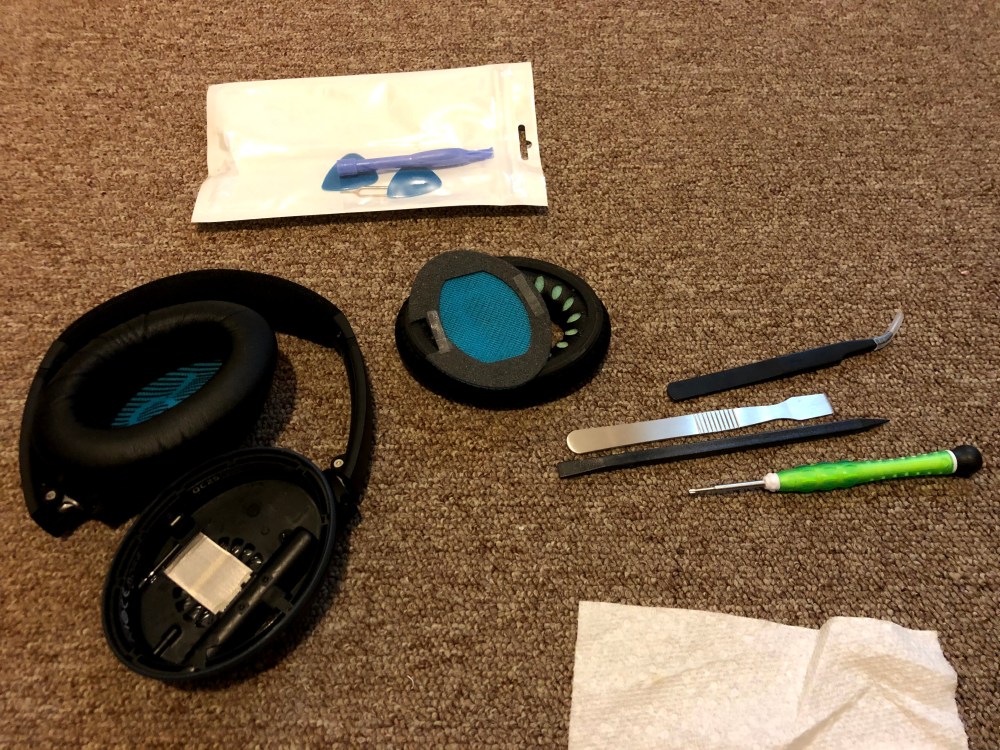


I removed the ear cushion and metal plate. This exposes the circuit board that actually does all that active noise cancelling magic. You can actually see the small microphone that picks up the noise from the outside that then gets analyzed to output the noise cancellation sound. I also found another microphone on the inside next to the speaker driver that analyzed the output sound for what I surmise is to further improve the noise cancellation algorithm by creating a feedback loop.
To be honest I was impressed at how much capability Bose was able to fit into these tiny circuit boards that pick up external audio, process that, create a noise cancelling signal, output to the speaker driver, pickup the output audio and then analyze the result. All of this done in real time.
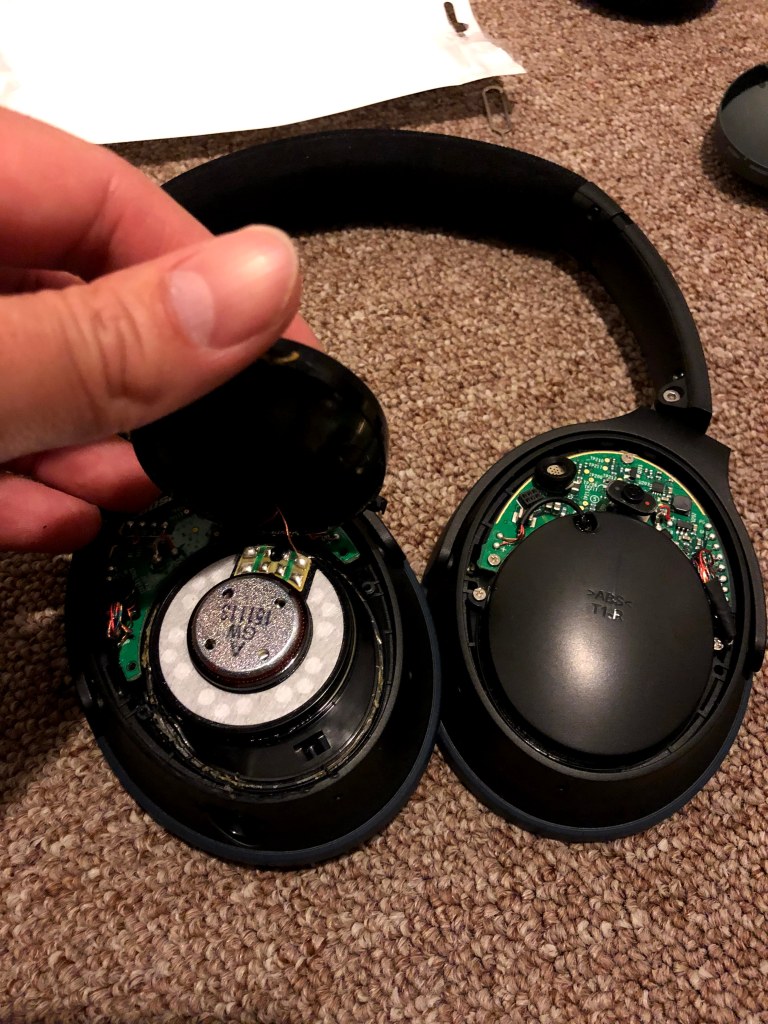
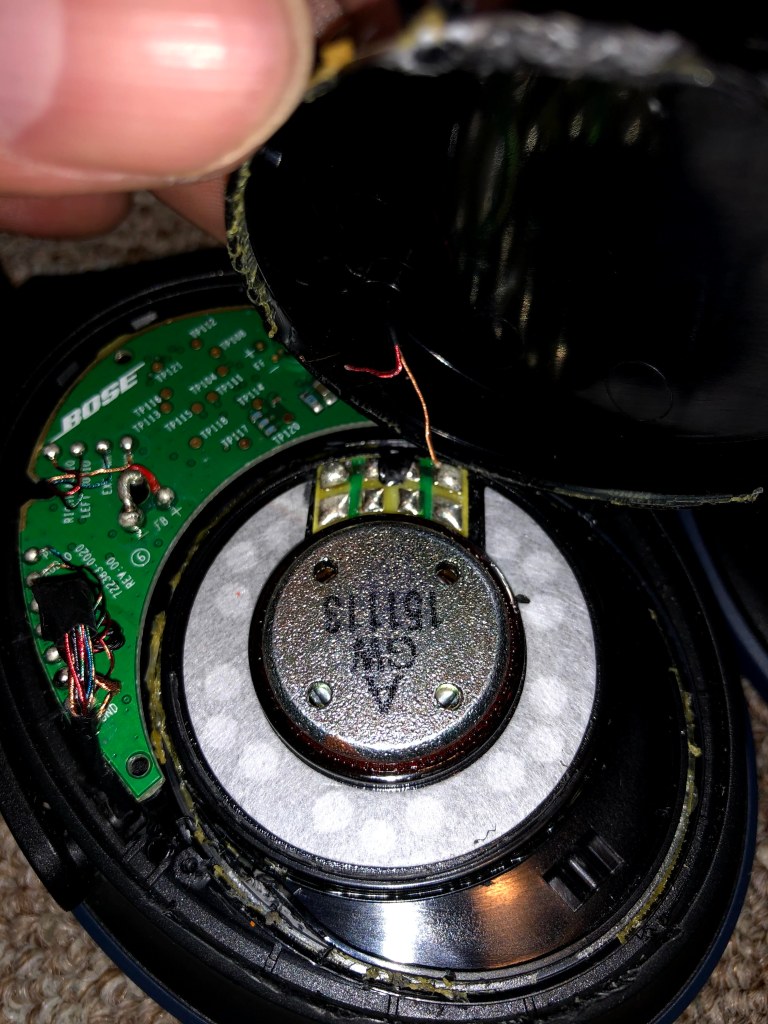

It took a bit of prying and poking to get that plastic cover off and expose the driver. This came at the cost of some scuff marks on the body. Something that would be bringing Joe Schmoe to tears right about now with what I am doing to these very premium headphones.
After a quick test with my multi meter of the driver, my suspicion is confirmed. It is dead. I see that these should be typically have a resistance of 32 ohms but mine was producing a big fat 0. Rest in peace poor driver. I shall ask my young assistant to harvest your soul (magnet) later.
Considering these are premium headphones that cost upwards of $300 to purchase, you would think that Bose would have used the most expensive state of the art drivers for it. If that was the case, it would mean that my repair adventure would cost more than just buying a new pair. Well lo and behold. A replacement speaker driver for a 40mm headphone of the same quality can be had from eBay for just $3. Of course you can buy a Bose OEM drivers for $60 but that would now cost more than what I had originally paid for these pair 😂. I am cheap but I am also impatient. I didn’t want to wait 4-6 weeks so I pay $20 to get a less shady looking one from Amazon. That way I can get it delivered the next day.
I am cheap but I am also impatient
Mad Computer Scientist

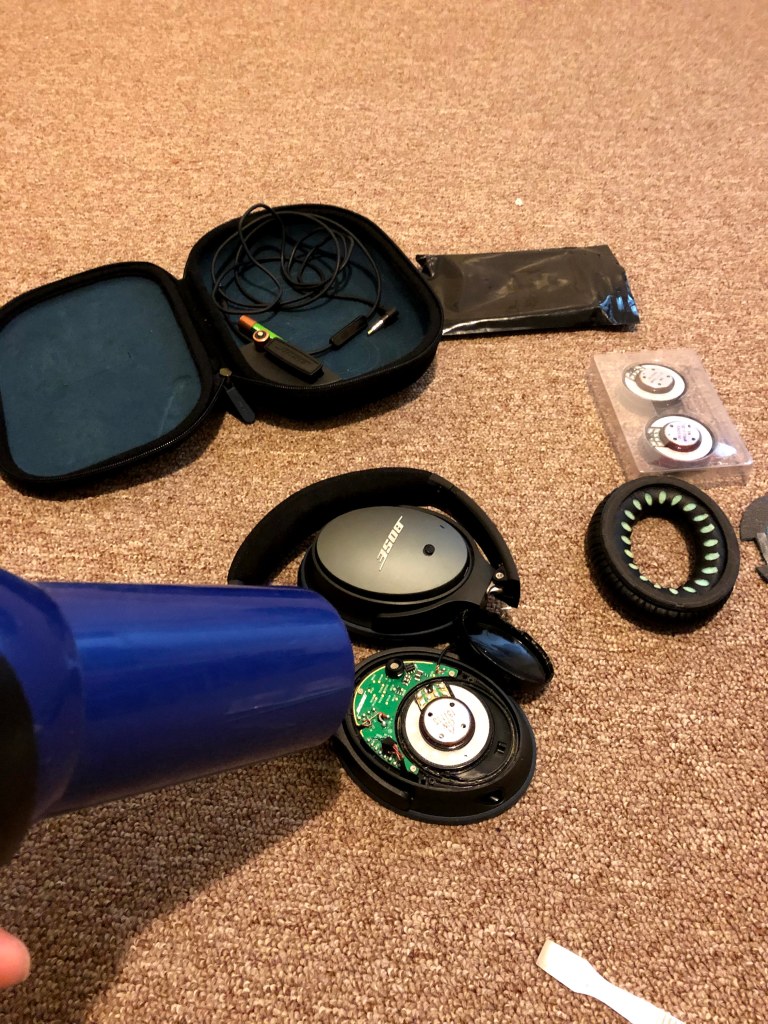
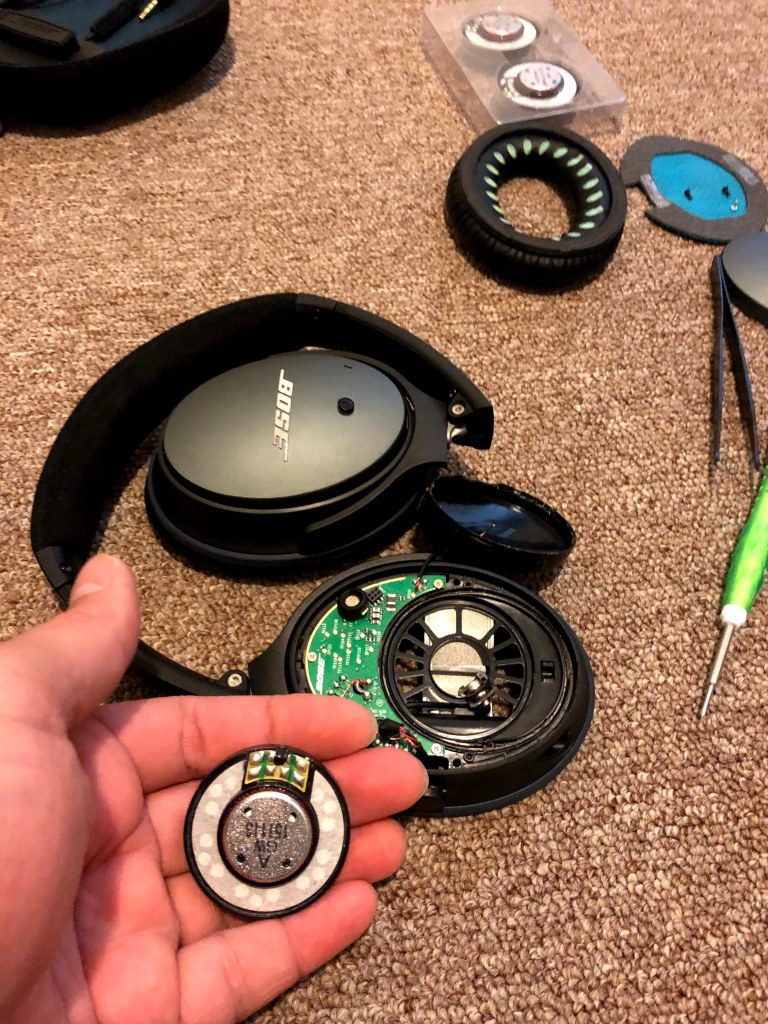
I actually could not pry out the drivers out of its socket because the adhesive was holding on for dear life. I came up with a brilliant idea of just heating it up to make the prying easier. Of course if I had come up with this brilliant idea earlier when I was removing the driver cover then I wouldn’t have left scuff marks on the body to begin with. Oh well.
Considering these are premium headphones that cost upwards of $300 to purchase, you would think that Bose would have used the most expensive state of the art drivers for it
Something Joe Schmoe would say

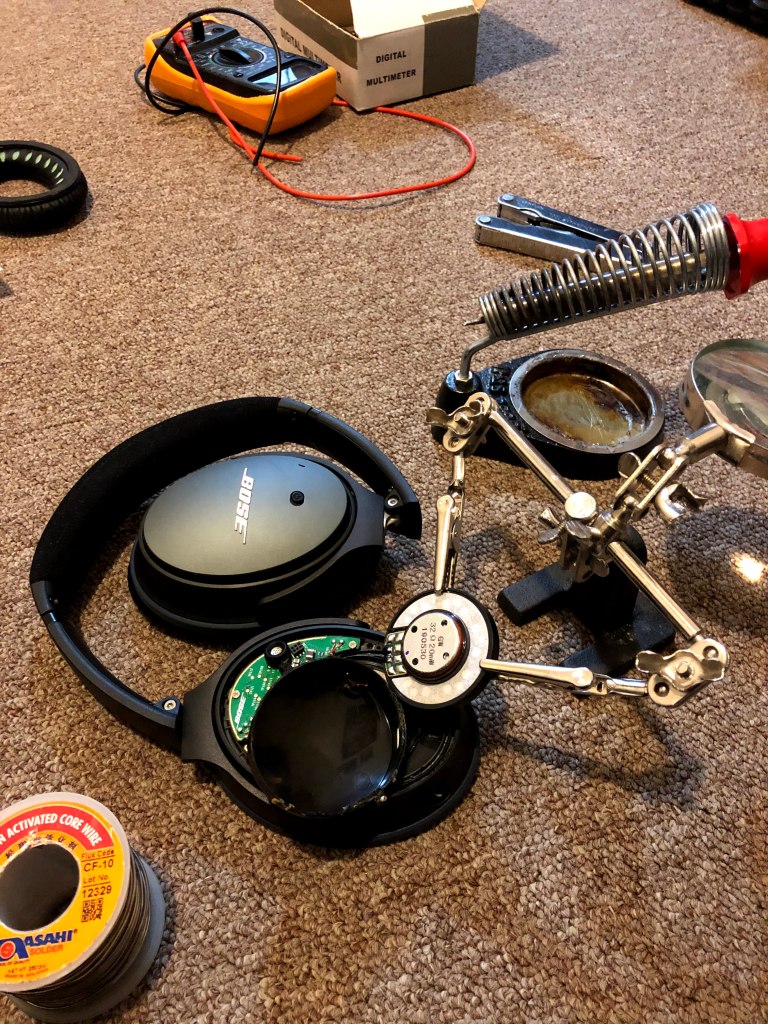
Once the replacement parts arrived I proceeded to solder one of them back on and test. 32 beautiful ohms later, the expensive premium headphones are now given a second chance at life!

Good as new! Well, it was used when I got it so, good as used with a new driver! I’ve been using them for a couple of weeks and cannot honestly tell the difference from the stock driver. This just shows how well that active noise cancelling algorithm is that even with really cheap drivers Bose can make something sound significantly better. Good job Bose!
This just shows how well that active noise cancelling algorithm is that even with really cheap drivers Bose can make something sound significantly better
Mad Computer Scientist

 Technical Insanities of a Mad Computer Scientist